
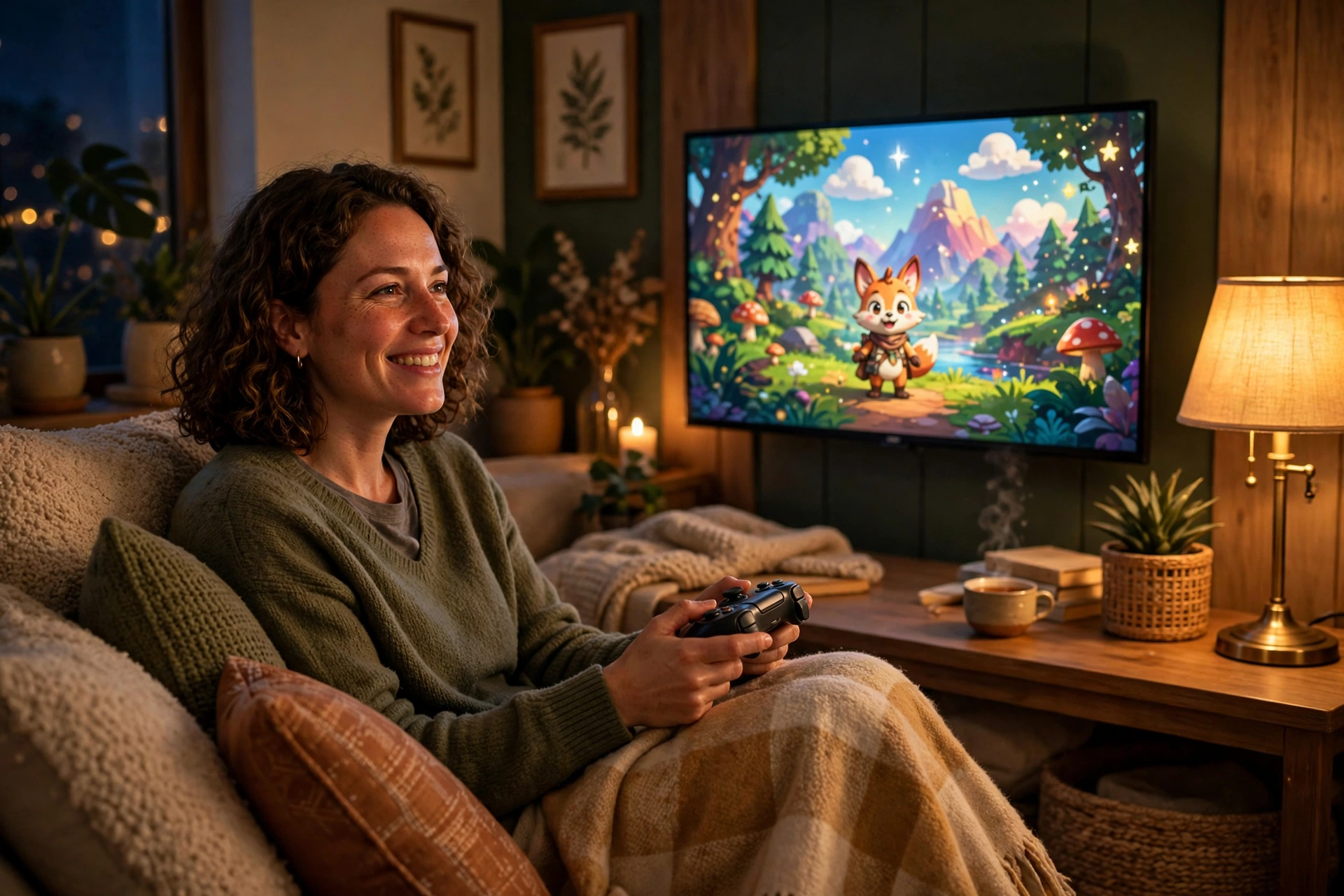
If you have ever watched someone start playing video games and thought “that looks fun, but I missed the boat,” you are not alone. Plenty of adults feel exactly that way. Maybe games passed you by as a teenager, or you played a little years ago and then life — work, family, bills — took over. Now the controllers look more complicated, the games look faster, and starting feels a bit embarrassing, as if everyone else learned a language you never studied.
Here is the good news: there has never been a better time to start playing video games as an adult. Games today come in every shape imaginable, from quiet farming adventures you play for twenty minutes before bed to epic stories that feel like a good novel you can walk around in. You do not need fast reflexes or a powerful computer. You just need a sensible first step, and this guide gives you one.
Why Start Playing Video Games Now?
It is a fair question. With so many demands on an adult’s time, why start playing video games? For most people, the answer is simple: they are genuinely enjoyable, and they fit into small pockets of time better than most hobbies. A game does not need a two-hour commitment. Many of the best beginner-friendly games are designed for half-hour sessions, and they save your progress automatically, so you can stop mid-adventure and pick up exactly where you left off the next evening.
Pick a Platform You Already Understand
The first decision when you start playing video games is where to play, and the simplest answer is: start with what you already own. If you have a smartphone, you already have a games machine in your pocket. Mobile games are the easiest entry point of all — no extra hardware, no setup, and thousands of free or cheap games to try. A phone is also forgiving: touch controls are intuitive, and you can play for five minutes while waiting for a bus.
If you would rather play on a bigger screen, a games console is the next simplest option. Consoles are built for people who do not want to think about specifications or settings. You plug one into the TV, sign in once, and download a game. A second-hand console from the previous generation is often a bargain and has a huge library of beginner-friendly games. A gaming PC offers the most choice, but it also asks the most of you in setup and cost, so save it for later, once you know you enjoy the hobby.
Do not let anyone pressure you about the “right” platform. The right one is the one you will actually switch on.
Choose Your First Game Wisely
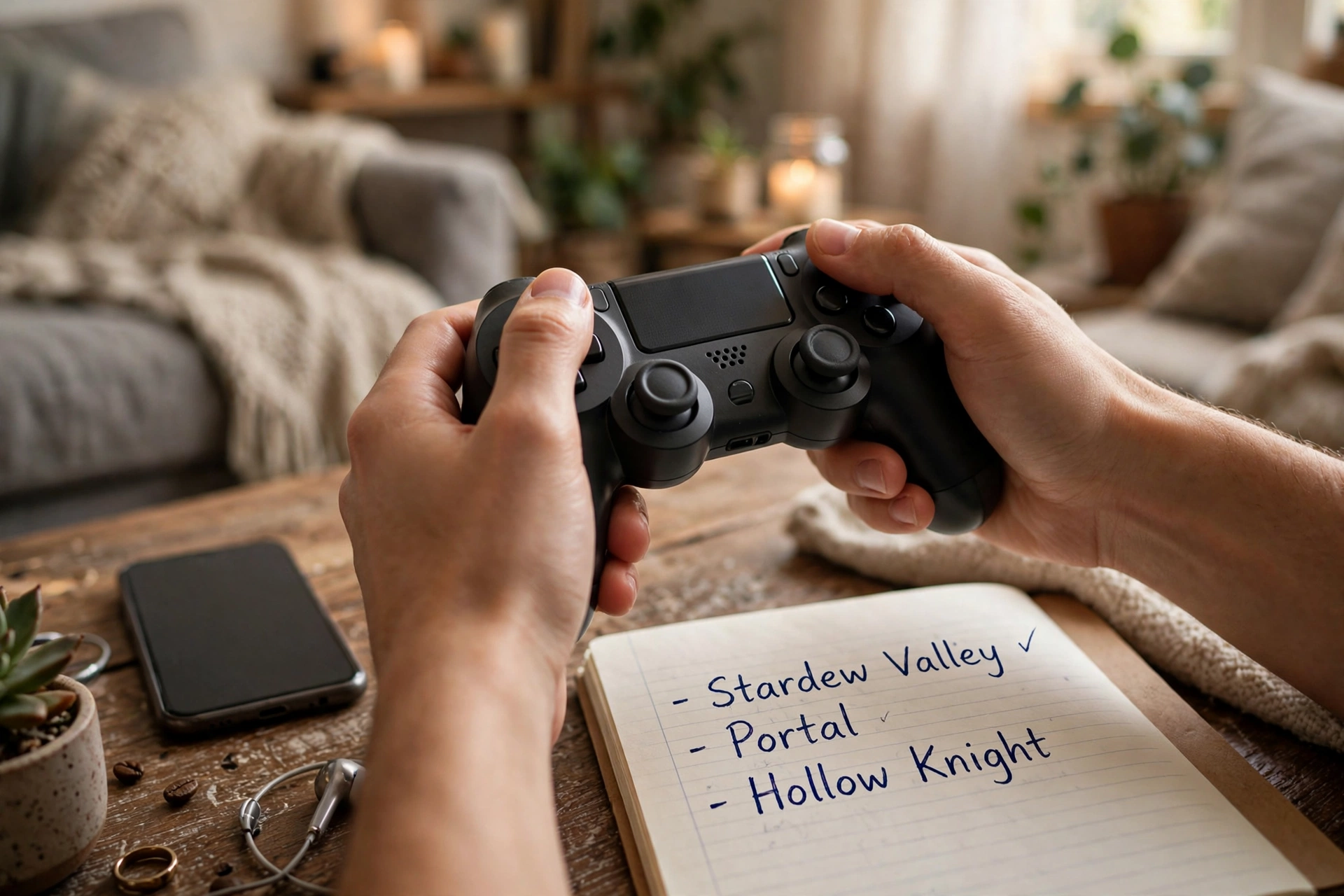
This is where most beginners go wrong. They pick a game because it is famous, not because it suits a first-timer. The most popular games online are often competitive multiplayer titles where experienced players will beat you in seconds — exciting to watch, miserable to start with. Save those for later, if ever.
Instead, look for games with a few friendly signs. A single-player story or adventure game lets you learn at your own pace, with no one waiting on you or judging your speed. Cozy games — farming, building, decorating, gentle exploration — are wonderfully welcoming, and many adults find them surprisingly relaxing after a long day. Puzzle games are another safe bet: they teach you their rules gradually and reward thinking rather than speed.
A practical trick is to watch a few minutes of gameplay video before buying anything. If the game looks calm and you can follow what is happening on screen, it is probably a good first pick. If it looks like chaos with numbers flying everywhere, skip it for now. Our guide to free browser games is a good no-cost place to try a few styles before spending anything.
Learn the Controls Without the Frustration
Every beginner who wants to start playing video games struggles with controls, and that is completely normal. Modern controllers have a lot of buttons, and the first hour with any new game feels clumsy. The trick is to expect that clumsiness and not treat it as a verdict on your ability. Nobody picks up a guitar and plays a song on day one; games are no different.
Start with the game’s tutorial, even if it feels slow. Tutorials exist precisely to teach you one button at a time, and skipping them is the most common cause of early frustration. Play the opening section twice if it helps — the second run always feels easier. If a game lets you change the difficulty, choose the easiest setting without any shame. Easy mode is not a lesser experience; it is the mode designed to let you enjoy the story and learn the systems.
Play With Friends, or Happily Alone
Games can be social when you start playing video games, but they do not have to be. Many adults enjoy playing alone, and single-player games respect that completely — they are built for one person, at their own pace, with a pause button. If you prefer company, though, cooperative games are a lovely way to spend time with a partner, a friend, or even grown-up children. In a cooperative game you work together instead of competing, so a less experienced player is a teammate, not a target.
If you do try online games, a few habits keep it pleasant. Play with people you know first, keep voice chat off until you are comfortable, and remember that you can leave any game at any time. And set up your account properly from the start: a strong password and two-factor authentication matter for a gaming account just as much as for email, since it holds your purchases and payment details.
Time and Money: Keep Both Under Control
Two worries stop many adults before they start: cost and time. Both are manageable. You do not need to spend much at all to start playing video games. Free games on your phone, free games on a console’s store, and regular sales mean your first month of gaming can cost nothing. When you do buy a game, wait for a sale if you can — popular games are often half price within a few months, and older games are frequently a bargain.
As for time, treat games like television: enjoyable in moderation, unhelpful in excess. A simple rule works well — decide your session length before you start, perhaps thirty to forty-five minutes, and use the game’s own save points as natural stopping places. Playing on a phone can drain the battery faster, so keep a charger nearby.
Mistakes to Avoid When You Start Playing Video Games
A few traps are worth naming. First, buying the hardest, most famous game first, because everyone talks about it. Fame is not friendliness. Second, comparing yourself to teenagers who have played for a decade. You are not behind; you are starting a hobby, and hobbies are supposed to be enjoyable, not competitive exams. Third, spending money on extra items inside a game before you know whether you even like it. Play the base game first when you start playing video games, and only spend more when you are sure it adds something you want.
Frequently Asked Questions
Am I too old to start playing video games?
No. When you start playing video games, there is no age limit, and millions of players are in their thirties, forties, fifties and beyond. Many games are designed with adult players in mind, with stories and pacing that suit a busy life.
Do I need an expensive console or computer?
Not to start. A smartphone is enough for hundreds of good games, and a second-hand console is a budget-friendly way onto a TV. Buy better hardware only after you know which kinds of games you enjoy, so you spend on the right thing.
How much time does gaming take?
As much as you choose when you start playing video games. Many beginner-friendly games are built for short sessions of twenty to forty minutes, and they save automatically. You can play three evenings a week and still make steady progress through a story.
Are video games a waste of time for adults?
Only in the same way any hobby can be, if it crowds out everything else. In moderation, games offer relaxation, problem-solving, and time with friends.
Final Thoughts
To start playing video games as an adult, you need far less than you think: a device you already own, one calm single-player game, and permission to be clumsy for the first few hours. Pick something gentle, play the tutorial, choose the easy difficulty, and give yourself a week before deciding whether the hobby fits.
So tonight, instead of another evening of scrolling, download one free game that looks appealing and try its first level. You might find a new favourite way to unwind — and if not, you have lost nothing but half an hour. The boat, it turns out, never left.
For official game age ratings when choosing a game, see the Entertainment Software Rating Board (ESRB).