
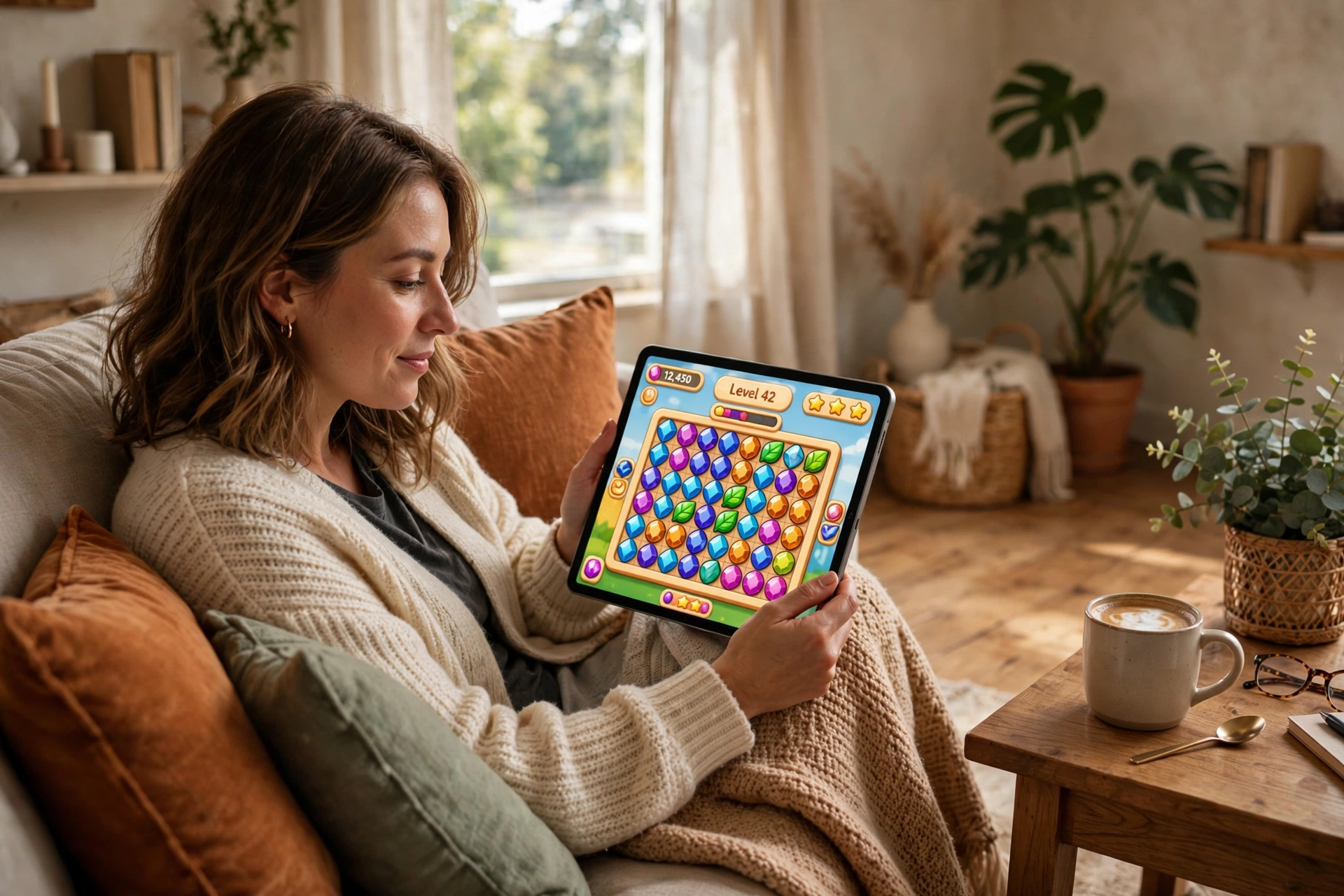
There is a particular kind of tiredness that comes from scrolling all evening. Your eyes are tired, your thumb is tired, and your brain feels like it has done nothing at all. Free puzzle games fix that feeling in a surprisingly pleasant way. They give your mind something real to chew on, they take ten minutes instead of two hours, and the good ones cost nothing.
Why Puzzles Work When Other Games Do Not
A puzzle asks you to notice a pattern, hold a few facts in your head, and test an idea. That is a small workout for exactly the skills we use all day: remembering a name, planning a route, spotting a mistake in a document. You will not become a genius by playing Sudoku, and anyone claiming that is selling something. But regular puzzling does train patience and focus, and those two things are in short supply these days.
How to Pick a Puzzle That Suits You
Before the list, one honest tip: pick the puzzle that matches your mood, not the one a list tells you is best. If numbers calm you down, Sudoku will feel like a treat and a crossword will feel like homework. If words are your thing, the reverse is true. The right puzzle is the one you actually look forward to opening.
Also, check two things before you commit to any free game: does it work without an account, and can you play it without watching an ad every ninety seconds? The games below all have free versions that pass that test, though a couple offer optional paid extras you can safely ignore.
1. Sudoku: The Quiet Classic
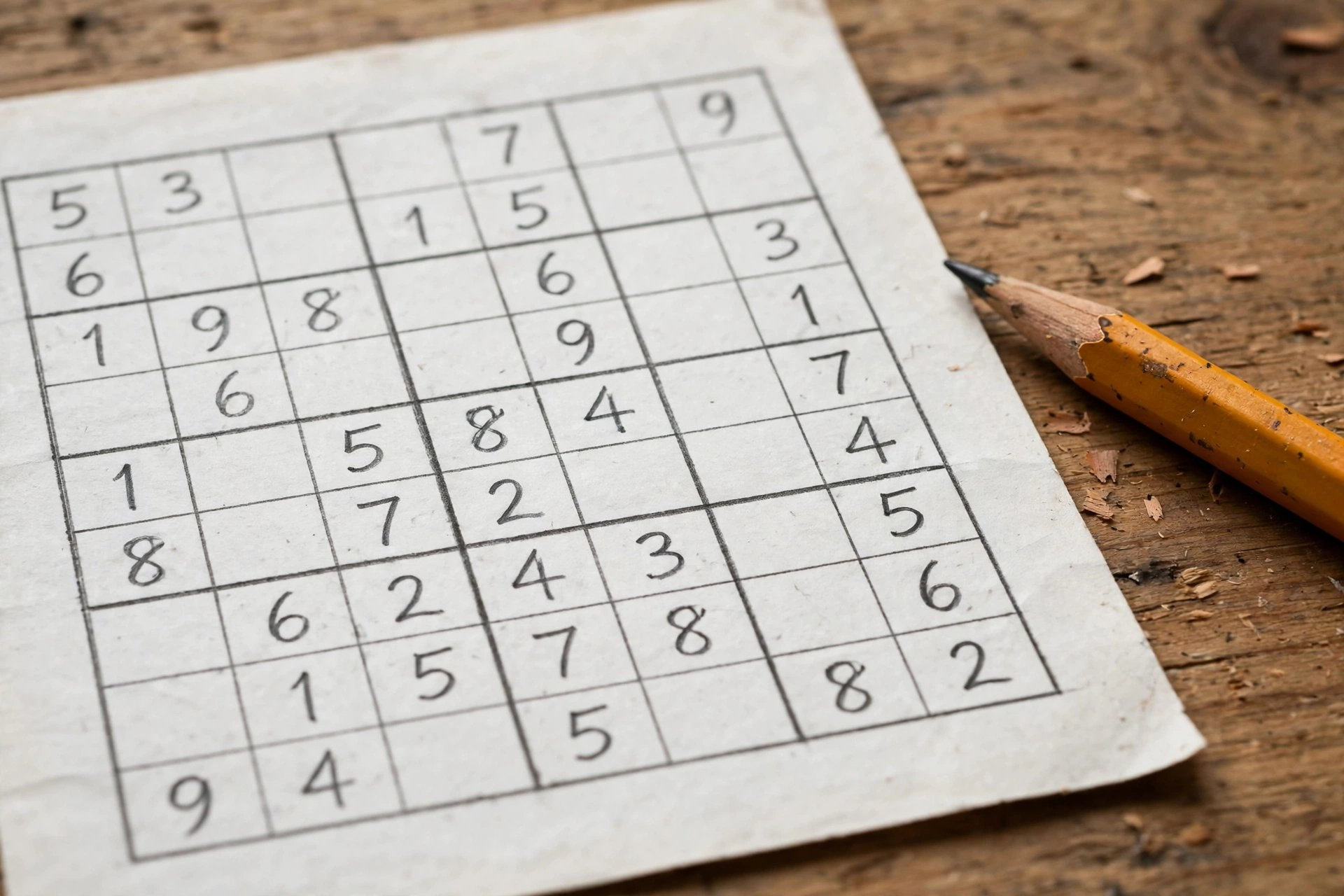
Sudoku needs no introduction, but it deserves its reputation. One grid, nine rows, nine columns, nine boxes, and a single rule: every digit from 1 to 9 appears exactly once in each row, column, and box. That is all. Yet a hard Sudoku can keep you happily stuck for half an hour, and finishing one gives a small, genuine sense of achievement.
Start on easy grids if you are new. The trick beginners miss is that Sudoku is not about guessing — it is about elimination. Look for a row or box that is nearly full, and ask which number can only go in one place. Once that clicks, medium grids open up fast. Free Sudoku apps and websites are everywhere, and a paper book works just as well if you prefer screens off.
2. Word Puzzles: Crosswords and Wordle-Style Games
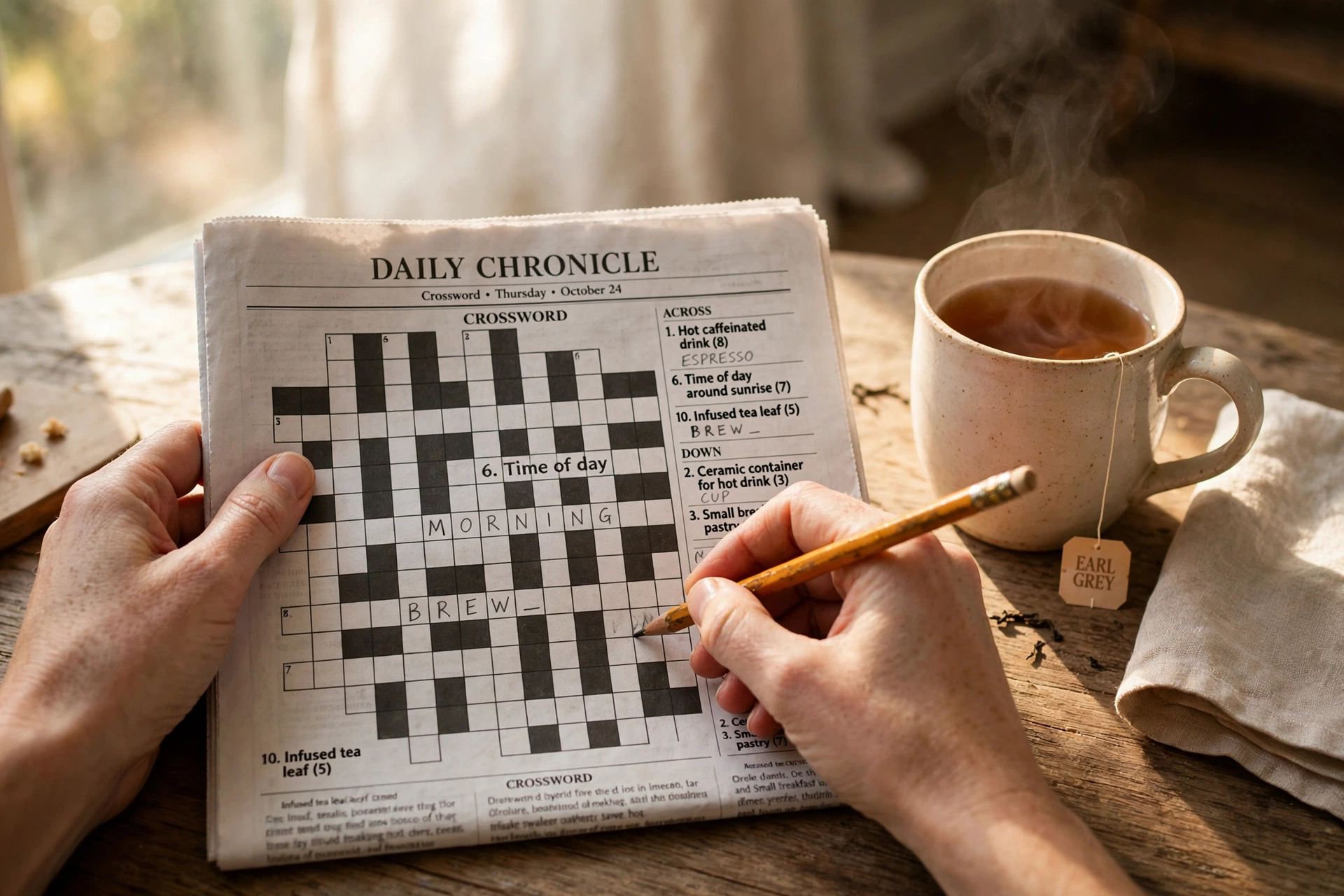
If numbers leave you cold, word puzzles are your corner of this list. A daily crossword — the small one in a newspaper app, not the giant Sunday monster — takes about ten minutes and quietly builds vocabulary. You learn odd little words, you remember them because you had to work for them, and you get the pleasure of a grid that slowly fills in.
Then there are the Wordle-style guessing games, where you have six tries to find a five-letter word from colour-coded clues. They are short, social, and brilliantly shareable: half the fun is comparing your score with a friend without spoiling the answer. The daily-one-puzzle format is a feature, not a limitation — it stops the game eating your evening, and it gives you something small to look forward to tomorrow.
A practical tip for both: do them on paper sometimes. A crossword in a newspaper, solved with a pencil, has no notifications, no ads, and no battery to drain. Your phone will thank you too — and if it is already struggling, our guide to a phone battery that drains fast covers the settings that help most.
3. Logic Puzzles: The Thinking Person’s Playground
Logic puzzles are the ones that make you feel cleverest, because the answer is never a guess. Nonograms (also called Picross) give you number clues for each row and column, and a picture slowly appears as you fill in the squares. Logic grid puzzles — the “who owns the zebra” type — ask you to combine clues until only one arrangement fits.
These games train a different muscle from Sudoku or crosswords: careful, step-by-step deduction. They are slower, quieter, and deeply satisfying, especially for people who like detective stories or strategy games.
Many logic puzzle apps are free with hundreds of levels, and they work offline, which makes them perfect for flights, waiting rooms, and anywhere with patchy signal.
4. Jigsaw Puzzles and Block Games
Not every good puzzle is about numbers or words. Digital jigsaws — a photograph broken into a few hundred pieces you drag into place — are wonderfully relaxing. There is no timer, no score pressure, just the slow pleasure of finding where a piece belongs. They are also one of the few games that work well on a big tablet screen shared with someone else, which makes them a nice, low-key family activity.
Block games like Tetris belong here too, even though they move faster. Fitting falling shapes together is spatial thinking in real time, and a ten-minute session genuinely sharpens how quickly you judge shapes and space. The free versions of Tetris and its many cousins are easy to find on any phone, and they are a good choice when you want something lively rather than calm.
Make It a Daily Habit in Ten Minutes
The best free puzzle games work because they fit into real life, so give them a real slot. Ten minutes is enough. Attach the habit to something you already do: a Sudoku with breakfast, a word game on the train, a jigsaw while the kettle boils. Habits tied to a trigger survive; habits that depend on willpower usually do not.
Keep it to one puzzle a day at first. The point is not to become a puzzle champion in a week — it is to replace ten minutes of scrolling with ten minutes of thinking, most days.
And be honest about what is not working. If a game starts nagging you with timers, lives, and purchases, delete it and try another. There are so many genuinely free puzzle games that there is no reason to tolerate one that treats your attention as something to harvest.
Mistakes That Spoil the Fun
A few traps are worth naming. First, guessing: in Sudoku and logic puzzles, guessing feels faster but teaches nothing and usually ends in a tangled grid you have to restart. Slow down, find the forced move, and let the puzzle teach you its logic.
Second, playing when you are exhausted. A puzzle at midnight, when your brain is already done, is not training — it is frustration with extra steps. Play when you are alert enough to enjoy it.
Third, paying for “brain training” you do not need. The free games on this list give you the same mental workout as the expensive apps, without the subscription.
Frequently Asked Questions
Do free puzzle games really improve your brain?
They improve specific skills — focus, pattern recognition, patience, and short-term memory — especially when you play regularly. They will not raise your IQ or prevent illness, and honest sources say so. Think of them like a walk for your mind: good daily exercise, not a miracle cure. A daily walk is a fine companion habit, and our guide to walking 30 minutes a day explains why simple habits stick.
What is the best free puzzle game for beginners?
Sudoku on easy mode, or a small daily crossword. Both have simple rules, short sessions, and a gentle learning curve. Start easy, enjoy finishing, and move up only when easy feels boring rather than comfortable.
Are puzzle games better than action games for focus?
For calm focus, yes — puzzles reward patience and planning, while action games reward speed and reflexes. Both have their place. If your goal is to unwind and concentrate, puzzles are the better tool; if you want excitement, pick the action game and enjoy it without guilt.
Can I play these games without internet or an account?
Most of them, yes. Sudoku, crosswords, logic puzzles, and jigsaws all have free offline versions, and many need no account at all. Check before you download: if an app demands an account just to play a solo puzzle, there is almost always a simpler alternative.
Final Thoughts
The best free puzzle games are not flashy, and that is the point. A Sudoku grid, a crossword, a logic puzzle, or a quiet jigsaw asks for ten minutes of your real attention — and gives back a finished puzzle, a calmer mind, and a small daily win. Pick one from this list, try it tomorrow morning, and see which one you reach for again the next day. That second reach is how you know you have found your game.
If you enjoy games that make you think, you may also like our guide to playing chess online, and if you want more free games with no downloads at all, our browser games picks are a good place to continue.
Related reading: these free puzzle games are easy to return to each day, so pick one of the free puzzle games above, play it for ten minutes, and keep your free puzzle games habit simple and enjoyable.