

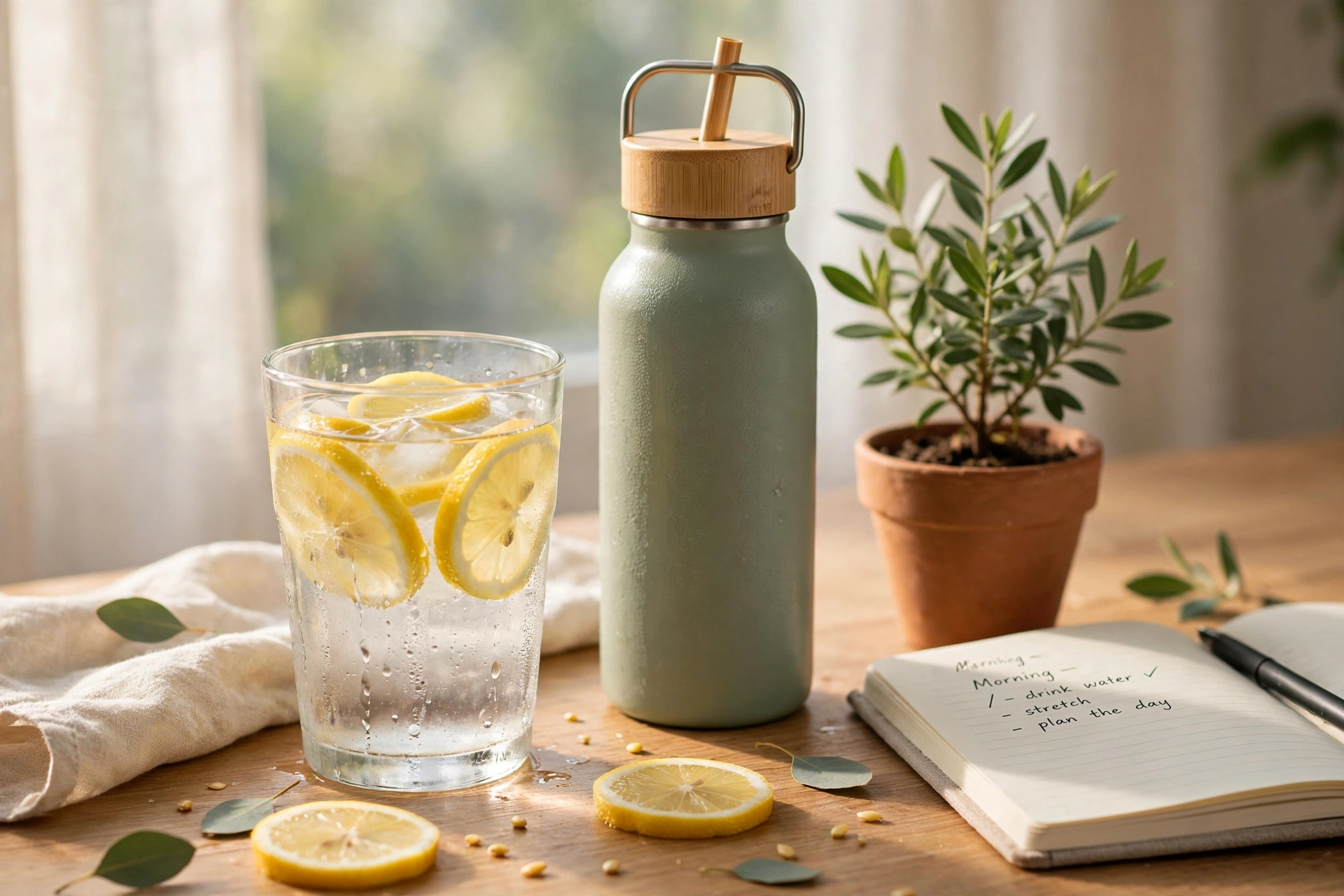
Most of us know we should drink more water. We have heard it from doctors, fitness coaches, and the label on every bottle. Yet by evening, the bottle is still half full, and we feel vaguely tired, with a dull headache we blame on the screen. The problem is rarely willpower. It is that drinking water feels like one more chore, and chores are the first thing a busy day drops.
The good news is that you do not need a strict schedule, a gallon jug, or an app nagging you every hour. To drink more water every day, you mostly need to make water easier to reach, nicer to drink, and tied to things you already do. This guide shows how, in small steps that actually survive a normal week.
Why You Should Drink More Water
Water does quiet work all day. It carries nutrients around the body, helps regulate temperature, keeps joints moving smoothly, and supports digestion. When you are even slightly short of it, the signs are often easy to miss: a dry mouth, a dip in concentration, a headache that arrives around three in the afternoon. Many people reach for coffee at that point, which helps for an hour and then leaves them more tired.
None of this means water cures everything. It does not. But for a lot of everyday sluggishness, a glass of water is the cheapest, simplest thing to try first. Think of it less as a health rule and more as basic maintenance — like charging your phone before it hits five percent.
The NHS dehydration guide lists the common signs to watch for, including thirst, headache and dark urine.
That is one more reason to drink more water through the day, rather than waiting until you feel parched.
How Much Do You Actually Need?
You have probably heard "eight glasses a day." It is a decent starting point, but it is not a law. How much you need depends on your size, the weather, how active you are, and what else you drink and eat. A labourer working outdoors in summer needs far more than someone sitting in an air-conditioned office, and soups, fruit, and tea all count toward your fluid intake.
A simpler target works better for most people: aim for a glass with each meal, one mid-morning, and one mid-afternoon, and a sip whenever you feel thirsty. That is roughly six glasses without any counting. If your urine is pale yellow, you are probably doing fine. If it is dark, or you rarely feel the need to go, that is your body asking for more.
If you have a medical condition that affects fluid intake — kidney problems, heart failure, or anything where a doctor has limited your fluids — follow your doctor’s advice over any general guide, including this one.
For most people, the simplest way to drink more water is to keep those meal-time glasses as the baseline.
Start Small: One Extra Glass, Not a New Lifestyle
The fastest way to fail at drinking more water is to buy a two-litre bottle on Monday and try to finish it by lunch. By Wednesday the bottle is in a cupboard, and you feel guilty every time you see it. Big changes rarely stick; small ones do.
Pick one extra glass to add this week. The easiest is a glass first thing in the morning, before your phone or your coffee. Keep a glass by the sink or on your bedside table the night before, so the decision is already made. Once that glass feels automatic — usually after a week or so — add a second one, perhaps with lunch. Two glasses a day, added quietly, beats a heroic week followed by nothing.
Once that first glass feels automatic, you are already on your way to drink more water every day.
This is the same trick that makes a morning routine work: attach the new habit to an old one, and let the old one carry it. Our morning routine guide uses exactly this approach for the first half-hour of the day.
Make It Easy to Drink More Water
We drink what is close and ignore what is not. If your water lives in a kitchen you visit twice a day, you will drink twice a day. So bring it to where you actually spend your time.
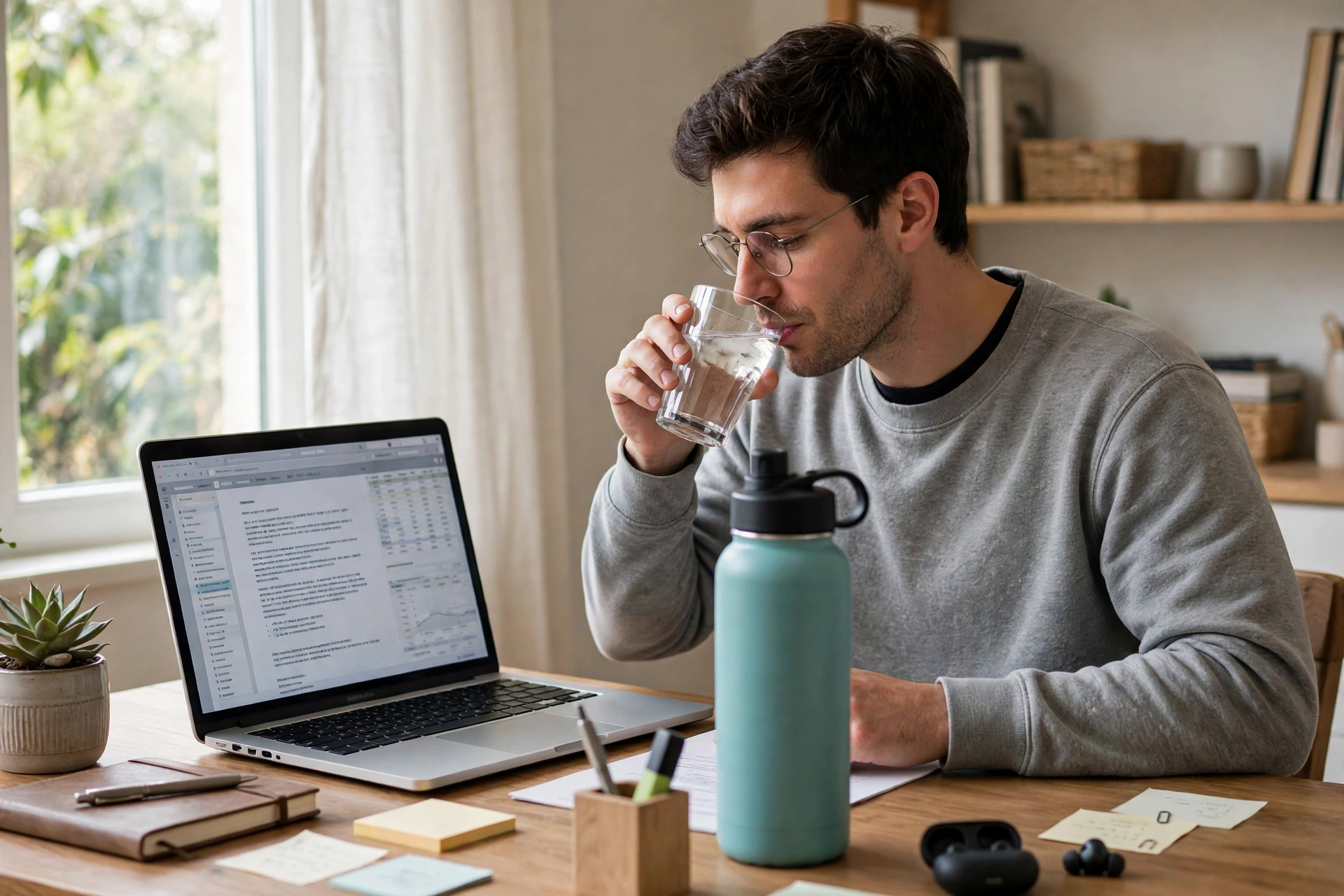
Get a bottle you genuinely like — one that fits your bag, opens with one hand, and does not leak. Fill it the night before and put it on your desk, in the car, or by your chair. At work, keep it beside your keyboard rather than in a bag on the floor. Refill it at lunch and you have quietly covered most of the day. A bottle with measurements on the side can help at first, but only if the numbers motivate you rather than guilt you.
At home, the same rule applies. A jug in the fridge means a cold glass is one step away, and a glass by the kettle reminds you to drink while you wait for the tea. Small changes in placement beat big changes in discipline, every time.
Make It Taste Better (Without the Sugar)
Plain water bores some people, and that is honest, not a failure. If you do not enjoy it, you will avoid it, no matter how good your intentions are. So make it taste like something you look forward to.
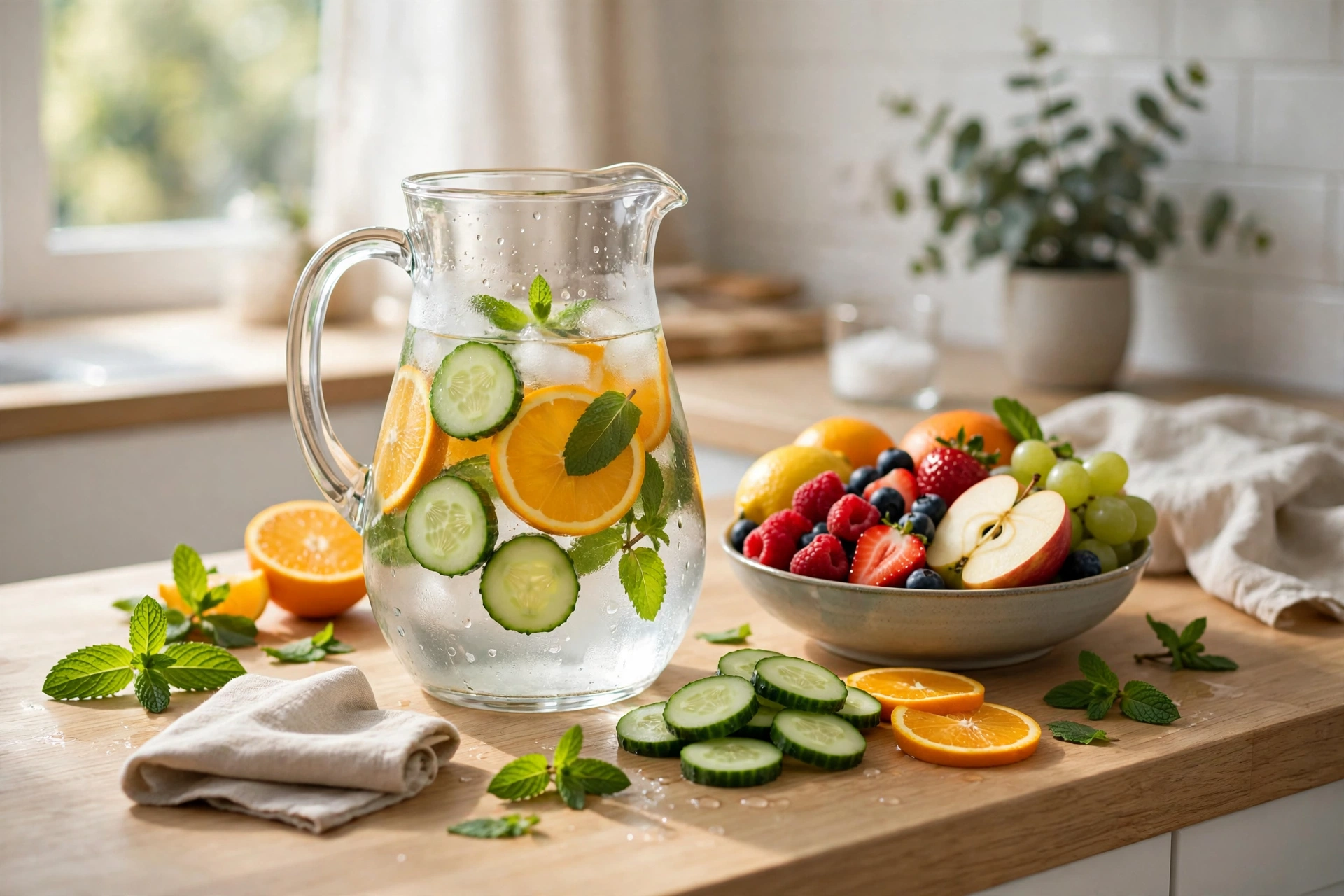
Flavoured water is still a good way to drink more water every day, without adding sugar.
A few slices of lemon, cucumber, or orange in a jug transform a glass, and fresh mint or a handful of berries works just as well. Keep a jug of this in the fridge and it feels like a treat rather than a duty. Sparkling water is another good option — the fizz makes it feel like a proper drink, especially with a meal, and the unsweetened kind adds no sugar.
What to watch out for is the sugary shortcut. Sweetened drinks and juices do hydrate you, but they also bring a lot of sugar and calories, which rather defeats the purpose of a healthy habit. Save them for occasional treats, and let flavoured water or sparkling water do the everyday work.
How to Drink More Water by Tying It to Things You Already Do
The most reliable way to drink more water is to stop relying on memory and start relying on routine. Pick three daily moments and attach a glass to each one.
For example: a glass when you wake up, a glass when you sit down to work, and a glass before each meal. Or, if you walk regularly, a glass before you head out and one when you get back — our walking habit guide pairs nicely with this, since a short walk is a natural reminder to drink.
You can also use small cues. Every time you check your phone for messages, take a sip. Every time the kettle boils, finish your glass. These sound trivial, and that is the point: a habit that feels trivial is one you will still be doing in a month.
Mistakes That Get in the Way
A few traps are worth naming. First, saving all your drinking for the evening. Gulping a litre at nine at night will not make up for a dry day — it will just send you to the bathroom all night. Spread it out instead, and ease off an hour or two before bed.
Second, replacing water entirely with coffee or energy drinks. Caffeine has its place, but three or four strong coffees a day can leave you jittery and, paradoxically, feeling more drained. A glass of water between coffees is a simple balance that most people notice quickly.
Third, buying gadgets before building the habit. A smart bottle that glows is fun, but it cannot do the drinking for you. Start with an ordinary bottle and a routine; add gadgets later, if you still want them.
Avoiding those traps makes it easier to drink more water without forcing it.
Frequently Asked Questions
Does tea or coffee count toward my water intake?
Yes, mostly. Tea and coffee are mostly water, and they do hydrate you, even though caffeine has a mild diuretic effect. They count toward your daily fluids — but water is still the simplest, calorie-free choice, and a mix of both is better than coffee alone.
Is it possible to drink too much water?
It is possible but rare, and it usually comes from forcing very large amounts in a short time, such as during extreme endurance events. For normal daily life, drinking when you are thirsty and spreading intake through the day is safe. If you have a condition affecting fluid balance, follow your doctor’s guidance.
Should I drink before, during, or after exercise?
All three, in small amounts. Sip before you start, take small sips during, and drink properly afterwards rather than waiting until you feel parched. For short workouts under an hour, plain water is all you need — sports drinks are designed for longer, sweatier sessions.
What if I keep forgetting?
Make forgetting impossible rather than trying harder to remember. Keep the bottle visible, pair drinking with meals and breaks, and set one reminder at the time you most often forget — usually mid-afternoon. One reminder beats ten, because ten get ignored. That reminder is there to help you drink more water, not to nag you.
Final Thoughts
Learning to drink more water is not about discipline or perfection. It is about a bottle you like, water that tastes good, and three or four moments in your day when a glass fits naturally. Start with one extra glass tomorrow morning, and add another when the first feels easy.
A week from now, if you drink more water each day, you will probably notice the difference before you can measure it: fewer afternoon headaches, a bit more energy, and a habit that no longer needs thinking about. That is the whole goal — not a perfect hydration chart, but a simple habit that quietly takes care of itself.